Rating: ★★★☆☆
Some books whisper dread like a lullaby, and others scream it in your face with a bloody, toothy grin. Nothing But Blackened Teeth tries to do both—and in some ways, it succeeds. In others, it bites off more than it can chew.
Cassandra Khaw serves up a novella soaked in Japanese folklore, drenched in dread, and sharpened by razor-wire prose. We’re thrown into the decaying walls of a Heian-era mansion, haunted by the bone-deep sorrow of a bride buried alive. The premise is devilishly enticing: a ghost bride, a group of friends with festering wounds of their own, and a destination wedding that quickly unravels into psychological terror.
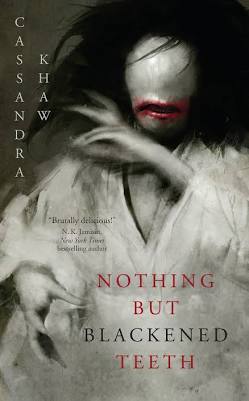
The atmosphere? Impeccable. It slithers. It drips. The house breathes, groans, and watches. Khaw’s descriptions are rich and grotesque, each sentence a layered macaron of horror and metaphor. It’s claustrophobic and lush, like being smothered under antique silk.
But here’s where the teeth start to grind. The characters—spiteful, bitter, emotionally volatile—feel like ghosts themselves, wandering through unresolved trauma and thin motivations. Dialogue snaps like brittle bone, often sounding more performative than authentic. For a horror novella, the scares are few and far between, buried beneath layers of lyrical introspection. And while Khaw’s prose is beautiful, it’s also heavy—sometimes so ornate it chokes the pacing.
There’s power here, no doubt. Nothing But Blackened Teeth is an ambitious blend of gothic horror and emotional unraveling, with a unique cultural twist that’s refreshing in a genre often obsessed with Western tropes. But that power doesn’t always translate into a satisfying narrative arc. The novella wants to haunt you—but sometimes it just loiters in your periphery.
🥄 Devour or Nibble?
Nibble. This is a beautifully written, evocative little ghost story best enjoyed in one sitting with a flickering candle and a taste for the poetic. But don’t expect to leave with a full stomach.
 literary gluttony
Leave a comment